No products in the cart.: ₹0.00

By alloytek
0 Comments
A cabin lock lives a harder life than almost any other lock in a building. The door of a manager’s cabin or a home study gets pushed open dozens of times a day, closed quietly for calls, locked in a hurry at the end of the evening, and left alone all weekend. The front door gets more attention, but this inner door gets more use. That combination of constant traffic and real security needs is why picking the right cabin lock is worth a little thought, whether you are fitting out a ten-person office in Noida or turning a spare bedroom in Pune into a place to work from home.
What a cabin lock has to do through the day
Think about how the door is used across a normal day. In the morning the occupant unlocks it with a key from the corridor side. Through working hours the door needs to latch shut against draughts and noise but open with a simple push of the handle, from either side, without anyone reaching for a key. During a confidential meeting the person inside may want to stop others walking in. In the evening the door is locked from outside and the key goes home.
A good cabin lock handles all of this with one lock body. The usual arrangement is a latch worked by the handles on both sides, plus a deadbolt that is thrown by a key from outside and by a key or thumb-turn from inside. The latch keeps the door closed. The deadbolt secures it. Keeping those two jobs separate means nobody gets locked in by accident and nobody has to fiddle with keys just to step out for tea.
For study rooms at home, the needs shift slightly. Many families prefer a privacy function, where a turn on the inside locks the handle so children do not burst in during an online class, while the outside has an emergency release in case a small child locks themselves in. If the study also holds documents, jewellery or a laptop you would rather keep secure, a key-operated deadbolt on the same body gives you both.
Lock body, cylinder and handle, chosen together
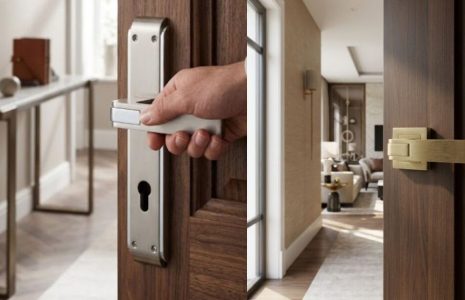
A mortise lockset suits most cabin doors because the lock body sits inside the door edge, out of reach, and the handles bolt through it for a firm feel. Measure the door thickness and the width of the stile before ordering. Office cabin doors are often lighter flush doors or aluminium and glass partitions, and those need a lock body sized for the frame they go into. A full-size body jammed into a thin partition profile will never sit square.
The cylinder is the part your key turns. A euro profile cylinder is easy to replace if a key is lost or an employee leaves without returning one, because the cylinder slides out after removing a single screw on the door edge. That is a real advantage in offices, where keys change hands more often than at home. For a door where only the outside needs a key, a cylinder with a thumb-turn on the inside saves fumbling. For cabins that hold files or cash, a cylinder that comes with more keys and a tighter key profile is worth asking about.
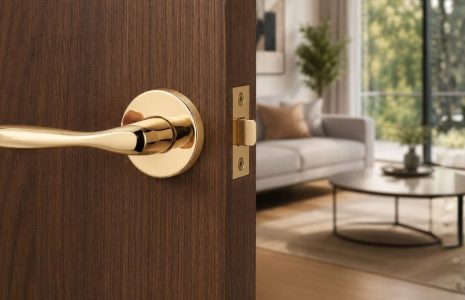
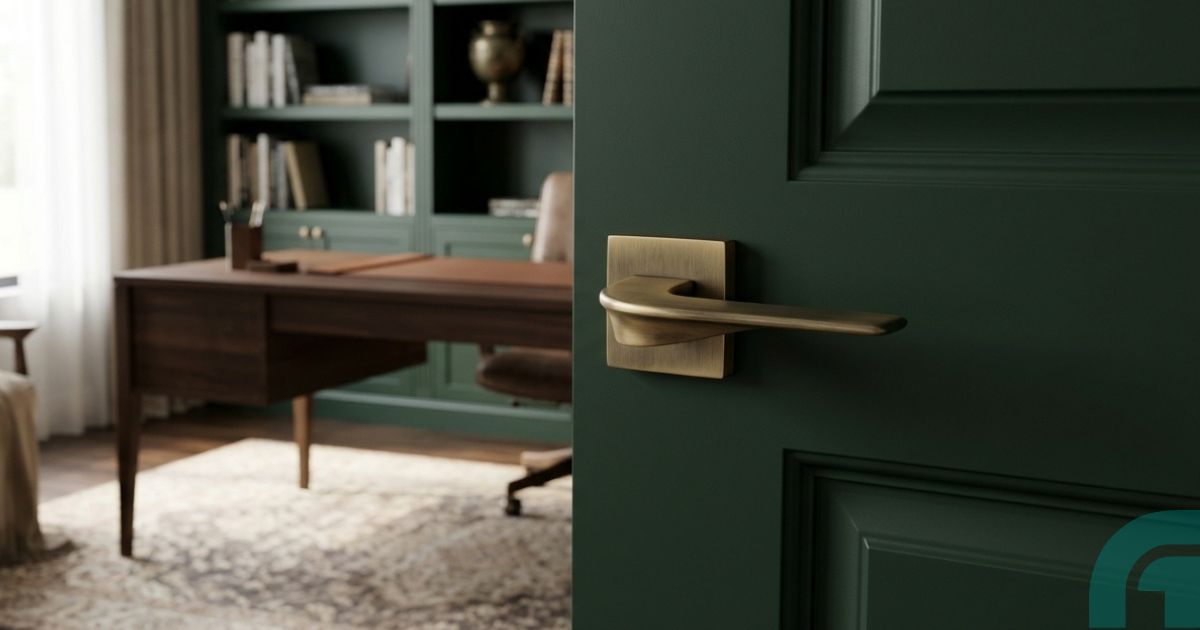
Handles deserve the same attention. Cabin doors are opened with full hands, a laptop bag on one shoulder and a coffee in the other, so a lever that can be pushed down with an elbow beats a knob every time. A plate-mounted mortise handle hides the fixing screws and covers small errors in the door cut. A rose-mounted lever looks cleaner on modern laminated doors. Stainless steel (SS) and black finishes suit most offices, while an antique or rose gold finish can warm up a home study.
Practical details that save trouble later
Fit and finish make a bigger difference than features on a spec sheet. Ask the carpenter to cut the mortise pocket snug, not loose, and to set the strike plate so the latch drops in cleanly without the door needing a shove. A latch that catches on the strike is the most common reason a cabin door gets left open all day, which defeats the point of having a lock at all.
In offices with many cabins, think about keys as a system rather than door by door. Decide who needs access to which rooms, how many spare keys are kept and where. Some buildings standardise one lock body and one cylinder size across every cabin, so spare cylinders can be stocked and swapped in minutes when someone leaves. Housekeeping and the security team will thank you for it.
Do not ignore noise and closing force either. A cabin is often a place for calls and focused work. A latch with a smooth, quiet action and a door that closes fully without slamming makes the room more usable. If the door is fitted with a door closer, check that the latch and closer work together so the door does not bounce back off the strike. A simple door stopper on the floor or wall also protects the handle from punching a hole in the partition behind it.
Also read
Call to action
Fitting out office cabins, a co-working floor or a home study? Alloytek manufactures mortise locks, locksets, euro profile cylinders and mortise handles in Aligarh, with more than 50 years of manufacturing behind the range. Call or WhatsApp +91 79009 79006 to talk about the right cabin lock for your doors, or visit the Alloytek works at C-164-166, Sector-1, Talanagari, Aligarh-202001. Dealers and interior contractors can also see the Become a Dealer page on the Alloytek website.