No products in the cart.: ₹0.00


By alloytek
0 Comments
The bell rings at half past nine at night. You walk to the main door, lean in to the small lens, and see a blur of a face, half a shoulder, and nothing of the corridor beside it. Is that a courier or someone you do not know? The door magic eye was supposed to answer that question, and it did not. Most people only realise their door viewer is the wrong one at a moment like this, which is why it is worth spending a few minutes choosing it properly.
What a door viewer is really meant to do
A door magic eye, also called a door viewer or peephole, is a small tube of lenses fitted through the door at eye level. From inside you see a wide, slightly curved picture of the area outside. From outside, the lens looks like a dot of glass and gives away almost nothing about what is happening indoors. That one-way quality is the whole point. You can check who is at the door without opening it, without unchaining it, and without letting the visitor know whether anyone is home.
A good viewer does three things well. It shows enough of the landing to spot a second person standing to one side. It gives a picture clear enough to recognise a face. And it stays firmly fixed in the door for years without loosening or fogging.
Getting the viewing angle right
Viewers are commonly sold with angles around 160, 180 or 200 degrees. A narrower lens gives a slightly larger, clearer face straight ahead but cuts off the sides. A wider lens covers more of the corridor at the cost of more curvature at the edges. For a flat or apartment door that opens onto a shared landing, a wider angle is usually the better choice, since the stairwell and neighbouring doors sit off to the side. For a bungalow gate door facing a straight path, a standard angle is often enough.
Height matters as much as the lens. Fit the viewer at a comfortable eye level for the adults in the house, and if there are elderly family members or someone who uses a wheelchair, consider a second viewer set lower. It costs very little and saves somebody from opening the door blind.
Lighting outside counts for a lot too. A viewer can only show what is lit. If the landing bulb sits directly above the door, a visitor’s face falls into shadow under their own forehead. A light placed a little to the side, or a wall light opposite the door, gives the lens a much clearer picture after dark. It is a small electrical change that makes even a modest viewer far more useful.
Match the door magic eye to your door thickness
This is the step people skip. A viewer is two threaded halves that screw together through a hole in the door, and each model is made for a particular thickness range. Indian main doors vary a lot, from slim flush doors to thick solid wood doors with decorative mouldings. If the viewer is too short, the halves will not meet. If it is too long, the outer barrel sticks out and invites tampering.
Measure the door at the exact spot where the viewer will go, not at the edge, because panelled doors are thinner in the recessed areas. Check the drill size the viewer needs as well. A clean, straight hole drilled from both sides toward the middle avoids splintering the face of the door. Then tighten the two halves firmly but not so hard that the lens housing distorts.
Brass or other materials, and why it matters
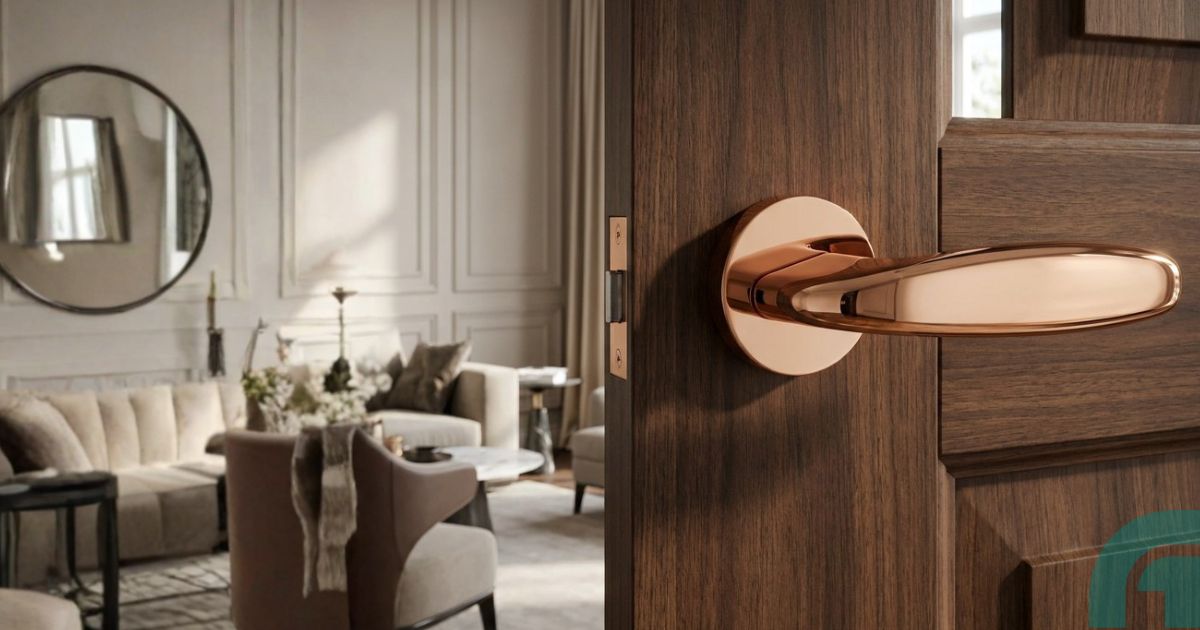
Door viewers are made in brass, zinc alloy and other materials. Brass has a long record in door hardware because it resists corrosion, machines cleanly for fine threads, and holds its shape over years of use. In humid coastal cities and through long monsoons, that resistance to moisture and tarnish shows up as a viewer that still turns smoothly and does not develop a green bloom around the rim.
Lighter materials can work indoors or for budget projects, but the main door is the place where a solid brass door viewer earns its keep. Look closely at the lens too. Glass lenses tend to stay clearer than cheaper plastic over the years. A viewer with a privacy cover on the inside is a sensible extra, because it stops anyone from reading light changes through the lens when you walk past.
Alloytek makes door viewers in this spirit. The MEB710L door viewer is one example from a range built for main doors, in finishes that sit well beside the rest of the door hardware. Pairing the viewer finish with the mortise handle and door chain keeps the whole door looking planned.
Also read
Call to action
Choosing a door magic eye for a new home, a housing project or a dealer counter? Talk to Alloytek, the Aligarh hardware maker with more than 50 years of manufacturing and exports to over 25 countries. Call or WhatsApp +91 79009 79006, or visit the Alloytek works at C-164-166, Sector-1, Talanagari, Aligarh-202001. Dealers can see the Become a Dealer page on the Alloytek website to stock the range.