No products in the cart.: ₹0.00

By alloytek
0 Comments
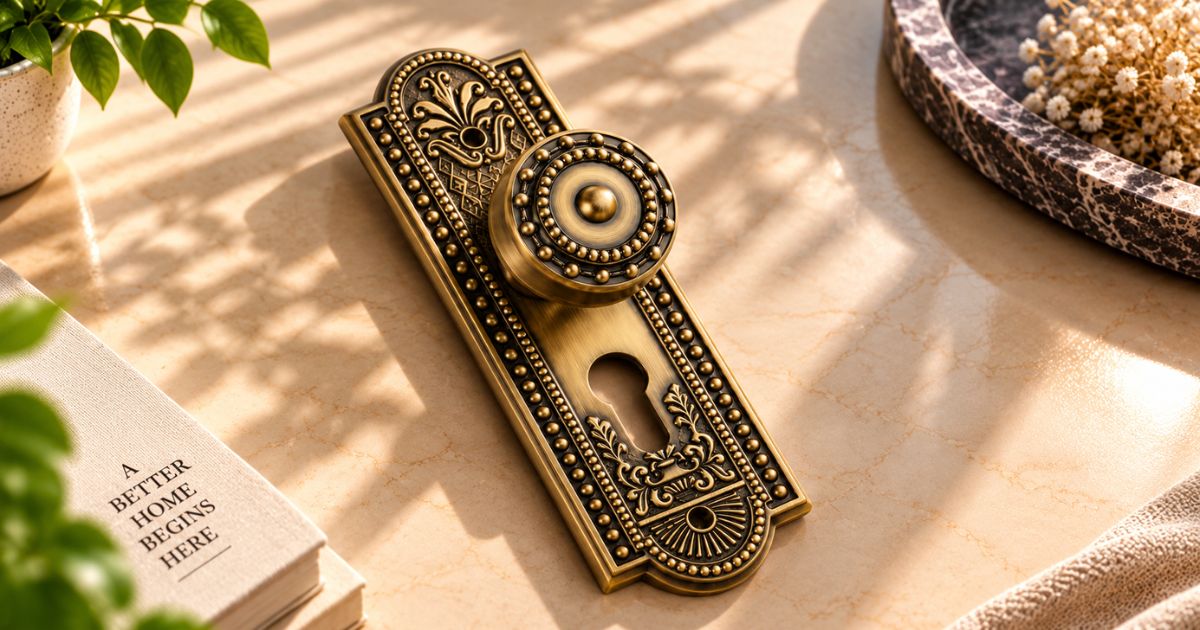
Look closely at a well kept old door in a Mumbai art deco building or a Lucknow kothi and you will often see the knob sitting on a long brass plate rather than a small round rose. The plate is not just decoration. It protects the door face from fingernails and rings, hides the fixings neatly and gives the knob a stronger presence on a large door. A brass door knob plate set brings that same idea into modern homes, and it is worth understanding before you choose between a plate and a plain rose.
Rose or plate, what is the difference
A rose is the small round or square base that sits behind a knob or lever. It is compact and minimal. A backplate is a longer, usually rectangular or shaped plate that runs vertically along the door, with the knob mounted on it and often a keyhole or cylinder cut-out below.
The plate spreads the visual weight of the hardware over a larger area. On a tall, heavy door, a small rose can look lost. A plate fills the space and makes the door feel properly dressed. On a slim internal door in a minimal apartment, a rose may suit better.
Why the plate protects the door
The area around a knob takes constant contact. Fingers, rings, keys and bangles all brush the door face as people reach for the knob. Over time, paint chips and veneer wears, leaving a darker patch around the hardware. A brass plate takes that wear instead, and brass can be cleaned and refinished far more easily than a door can be repainted.
The plate also hides the fixing screws and any small imperfections where the carpenter cut the door for the latch and spindle. On a new door, that means a cleaner look. On an old door being refitted, it can cover the marks left by previous hardware.
Choosing the plate shape and size
Plates come in straight rectangles, rounded ends, shaped classical outlines and slim modern profiles. A plain rectangle with crisp edges suits contemporary doors. A plate with softened or scalloped ends suits heritage and traditional interiors. Match the plate’s height to the door, a longer plate for tall main doors and a shorter one for internal doors.
Decide whether you need a keyhole or cylinder cut-out in the plate. A bedroom with a privacy turn needs a different plate than a store room with a key lock. Alloytek’s CD306 knob on plate set is an example of a complete knob and plate in one matched set, which avoids the guesswork of combining parts.
The finish should match the rest of the door
Brass plates are available in polished, antique, satin and darker finishes. Choose the same finish for the knob, the plate, the door viewer, the knocker and any hinges that show. A matched set of fittings looks deliberate. A polished plate beside antique hinges looks like two different renovations.
In humid cities, check that the finish on the plate is even across its whole face and along its edges. Plates are large, flat surfaces, so uneven finishing shows up quickly in side light.

Fitting it straight and flush
A plate shows every mistake in fitting. If it sits even slightly tilted, the eye catches it at once. Ask the carpenter to mark a vertical line with a level before fixing, and to check that the knob spindle sits at the right height for the latch behind.
The plate should sit flush with the door face, with no rocking at the corners. On panelled doors, position the plate on a flat stile rather than across a moulding, or the plate will not seat properly.
A detail that ages well
A brass door knob plate set is a small investment that protects the door, tidies the fixings and gives the knob real presence. Chosen with the right shape and finish and fitted straight, it is the kind of hardware that looks better as the years pass, gaining a gentle patina while the door behind it stays unmarked.
Plates also make life easier when you change the hardware later. If a family decides to move from a passage knob to a privacy function, or a heritage door needs a new latch, a plate covers the larger cut-outs that the change can leave behind. That flexibility is one quiet reason restorers and carpenters often prefer plates on older doors.
Also read
Call to action
Choosing a brass door knob plate set for a home, a heritage restoration or a hardware counter? Talk to Alloytek, the Aligarh hardware maker with more than 50 years of manufacturing and exports to over 25 countries. Call or WhatsApp +91 79009 79006, or visit the Alloytek works at C-164-166, Sector-1, Talanagari, Aligarh-202001. Dealers can see the Become a Dealer page on the Alloytek website to stock the range.