No products in the cart.: ₹0.00

By alloytek
0 Comments
Door hardware is the part of a building people touch most and specify last. It often gets settled late in a project, after the doors, frames and finishes are fixed, by whoever is under the most time pressure. Then it shows up in every snag list. Architects who choose door hardware manufacturers in India early, with a clear checklist, save themselves months of site queries and clients from years of drooping levers and sticking locks. What follows is a working checklist that can sit beside your specification sheet.
Range depth across functions
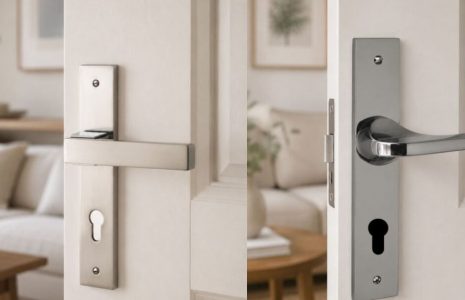
Begin with the full door schedule and check whether one maker can cover it. A typical residential project needs entrance locks, privacy locksets for bathrooms and bedrooms, double door locks for balconies and living rooms, and perhaps baby latch locks for children’s rooms. Commercial work adds cabins, washrooms, store rooms and service doors. Then come the accessories, door stoppers, viewers, security chains, knockers, numerals, hooks, pull handles and cabinet locks.
A manufacturer with depth across these functions lets you specify one family throughout. Handles, spindles and fixing patterns stay consistent, and the finish matches from main door to wardrobe. Mixing several brands to fill gaps usually leads to a near match that looks wrong on site.
A related trap is starting with the handle design. Start instead with what each door has to do. Who uses it, how often, does it need a key, a privacy turn, an emergency release, a deadbolt, an escape route? Write that down door by door. Only then choose handle styles and finishes from the options that suit each function.
This keeps the design honest. A beautiful lever on the wrong lock body is still the wrong hardware.
Material and build quality
Ask what each product is made of and how. Brass and zinc alloy mortise handles each have their place, brass for weight and longevity, zinc for sculpted shapes at a friendlier cost. Stainless steel suits high-traffic and hygiene-sensitive areas. For locks, ask about case thickness, bolt construction and the quality of springs.
Request cutaway or opened samples where possible. A manufacturer confident in its build will be happy to show what is inside the lock body, not only the finish on the outside.
Finishes and consistency for door hardware manufacturers in India
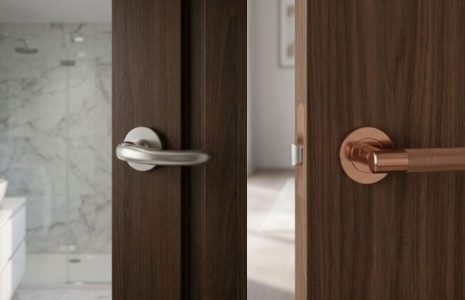
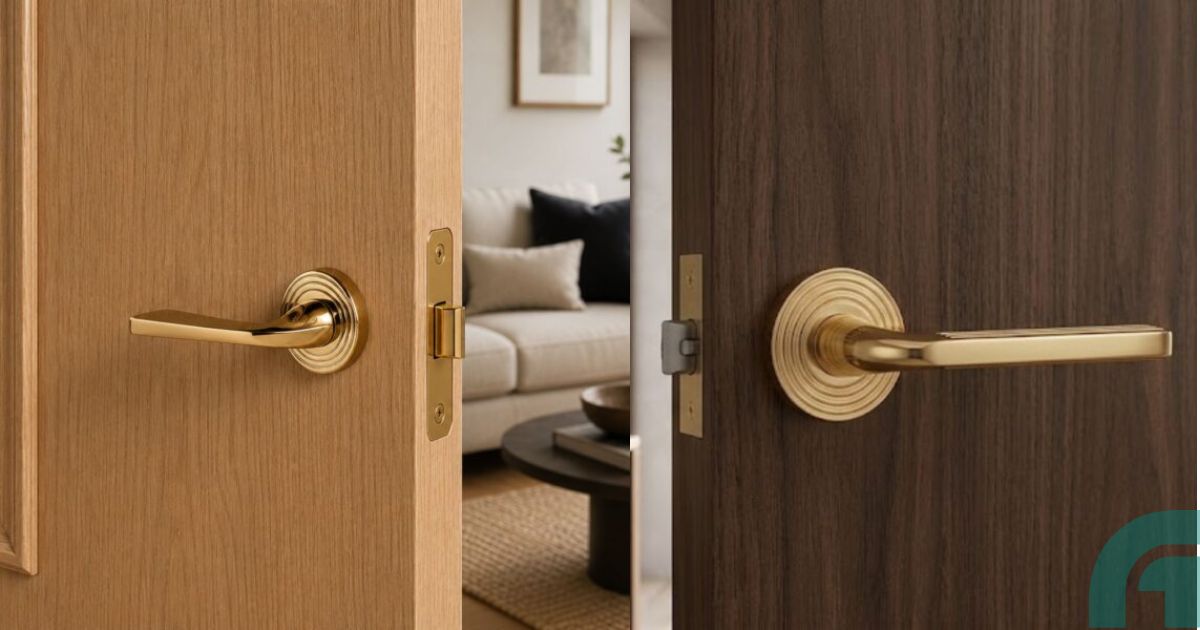
Finish is where clients notice problems first. Check which finishes are available across the full range, not just on the handles. SS, antique, black and rose gold are common choices, but the question that matters is whether the antique on the handle matches the antique on the door stopper and the viewer.
Ask how finish is controlled across batches and over time. On a phased project, the second tower may be fitted two years after the first. The maker should be able to match finishes across that gap, and you should ask how they do it. Humidity and coastal conditions matter too. Ask how finishes hold up and test samples in real conditions.

Samples, mock-ups and approval
Never approve hardware from a catalogue alone. Ask for samples of each key item in the chosen finish. Better still, fit a mock-up door with the full set, lock, handle, stopper and viewer, and let the client use it for a few days. Small issues like a lever that sits too close to the frame, a spring that feels weak, or a finish that reads differently under site lighting show up quickly.
Keep the approved samples, labelled and signed, as the reference for supply. When bulk supply arrives, compare against them.
Experience, manufacturing base and export record
Ask how long the company has been manufacturing and where. Aligarh, India’s lock city, has generations of lock-making experience, and long-established makers there often combine casting, machining and finishing under one roof. In-house production usually means better control of quality and lead times.
An export record is a useful signal too. Makers who ship to many countries have had to meet varied standards and packing needs, and that discipline usually carries over to domestic supply.
Documentation and site support
Good hardware is let down by poor fitting. Ask whether the manufacturer provides clear fitting templates and dimensions for each lock body, so carpenters cut accurate mortises. Ask about technical support when a site question comes up, and about spares and replacement cylinders after handover.
Check packing too. Hardware delivered in clearly labelled boxes, one set per door, with keys tagged, saves days on a large site.
Also read
Talk to Alloytek
Alloytek is an architectural hardware manufacturer in Aligarh with more than 50 years of manufacturing, over 1,000 products and exports to more than 25 countries. Its range spans mortise handles in brass and zinc, mortise locks for every function, euro profile and pin cylinders, door stoppers, viewers, security chains, knockers, numerals and cabinet locks. Architects, builders and interior designers can call or WhatsApp +91 79009 79006, or visit the Alloytek works at C-164-166, Sector-1, Talanagari, Aligarh-202001. Dealers can see the Become a Dealer page on the Alloytek website.

alloytek