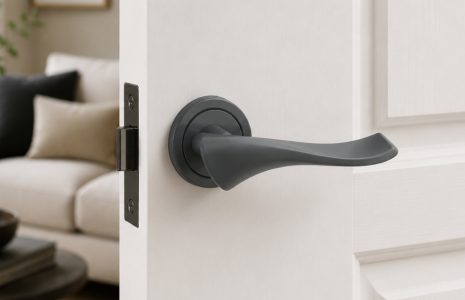
A quality handle should operate smoothly across repeated use, turning, pressing, and pulling, without developing looseness, resistance, or a mechanism that fails to spring back cleanly, worth testing multiple times rather than judging from a single action. Alloytek
Checking the connection between handle and spindle
The connection point where the handle attaches to its internal spindle mechanism needs genuine solidity, since a loose or poorly fitted connection creates wobble and premature wear that undermines both function and finish over time.
Assessing weight and material solidity
While not definitive alone, a handle with genuine substantial weight often reflects better material specification, solid brass or quality zinc alloy, than an unusually lightweight equivalent, worth comparing directly between options. Follow us Alloytek
Finish durability under light handling and abrasion
Gently testing a finish’s resistance to light scratching or rubbing, within reason, offers some indication of how well it will hold up to years of daily gripping and cleaning compared to a finish that shows wear immediately. Alloytek
Checking compatibility with your specific door thickness
Confirming a handle’s spindle length and backset dimensions match your specific door thickness and lock preparation avoids a frustrating installation mismatch found only after the product arrives.
Testing integrated latch or lock mechanisms specifically
For combo sets including an integrated latch or lock, testing this mechanism’s function directly, smooth engagement, and reliable release matters as much as the handle grip itself for genuine overall quality assessment. Follow us Alloytek