No products in the cart.: ₹0.00

By alloytek
0 Comments
A wedding reception at a banquet hall. A queue of guests outside the washroom, and one door that nobody is sure about. Someone knocks. Someone else tries the handle and rattles it. A voice from inside calls out, a little annoyed. Every one of those small awkward moments could have been avoided by a bathroom indicator bolt, the simple fitting that shows a colour or a word on the outside of the door when it is locked from inside. It is one of the most modest pieces of hardware in a building, and one of the most useful.
What a bathroom indicator bolt does
The idea is easy to grasp. On the inside of the door there is a turn or slide that throws a bolt into the frame. As the bolt moves, a small window or disc on the outside of the door changes, usually from green or a “vacant” mark to red or an “engaged” mark. Anyone walking up can see at a glance whether the room is in use without touching the handle.
The second feature matters just as much. On the outside there is usually a slot or emergency release that can be turned with a coin or a simple tool. If a child locks themselves in, an elderly family member feels unwell, or a guest in a hotel room cannot open the door, someone outside can release the bolt quickly without breaking the door. For washrooms, that emergency release is not a luxury. It is a safety requirement in spirit, even where it is not written into a rule.
Indicator bolts come in two broad forms. Some are surface-fitted, screwed onto the face of the door with a keeper on the frame. Others work as part of a privacy lockset, where the indicator and the turn are built into a mortise lock body and the handles operate the latch. The lockset approach looks cleaner and gives a door a single, coordinated set of hardware, which is why most new projects prefer it.
Where a bathroom indicator bolt earns its place
In homes, the case is simple. A family of five sharing two bathrooms in the morning rush saves a lot of knocking with an indicator. Homes with small children or elderly parents gain the most from the emergency release, because those are the people most likely to need help on the other side of a locked door. A coin slot on the outside is far gentler than a carpenter with a crowbar.
Hotels and guest houses use indicator bolts on shared washrooms in lobbies, restaurants and banquet areas. Guests do not know the building, often do not speak the same language, and appreciate a clear visual signal. Inside guest rooms, a privacy lockset with an emergency release lets housekeeping and staff reach a guest quickly in a medical situation.
Offices and commercial buildings have their own reasons. Shared washrooms on each floor, single-occupancy toilets for accessibility, and washrooms in clinics and showrooms all benefit from an indicator. It cuts down on interrupted visits and quietly respects people’s privacy. Restaurants and cafes, where the washroom door often faces the dining area, find that an indicator stops diners from watching the door to guess whether it is free.
Choosing and fitting one that lasts
Bathrooms are the harshest environment in a house for hardware. Steam, splashes, cleaning chemicals and humidity that lingers through the monsoon all attack finishes and internal springs. That makes material and finish the first thing to check. Stainless steel (SS) and well-plated brass hold up best. Look for a smooth turn on the inside that does not need force, because wet or soapy hands will be using it, and a clear indicator window that will not fade or crack.
Fit matters too. The bolt must line up with its keeper or strike so it throws fully, otherwise the indicator may show “engaged” while the bolt barely reaches the frame. Bathroom doors in India often swell slightly in wet seasons, so leave a sensible gap and check the alignment after the first monsoon. If the door is a lighter flush door, choose a lock body sized for its thickness.
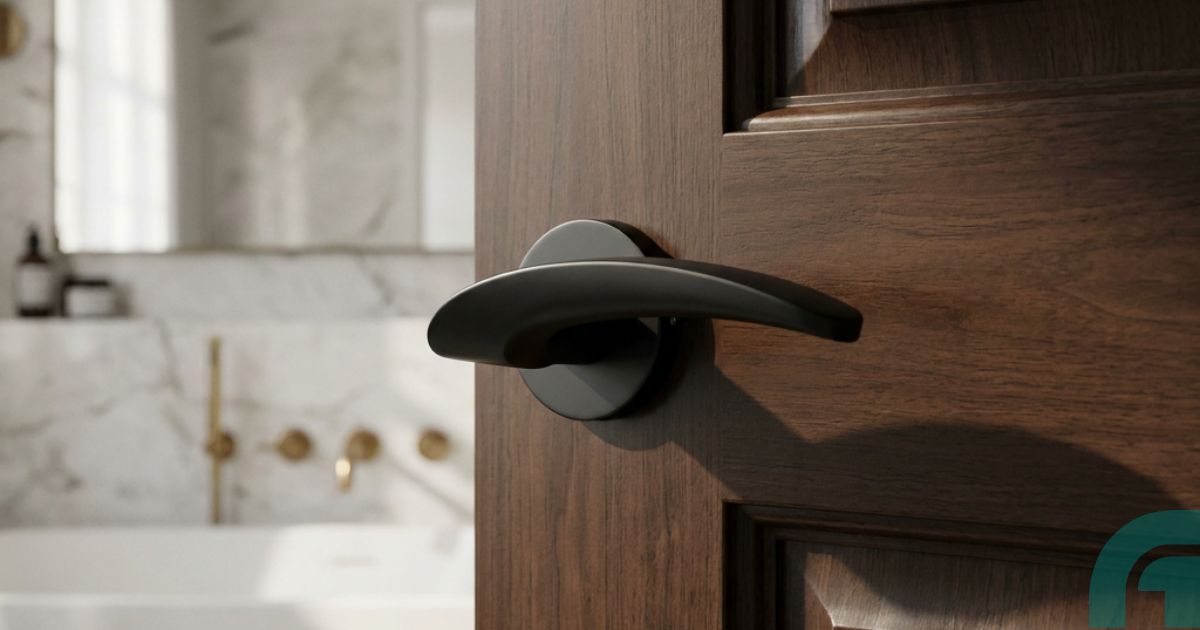
For a matched look, use a privacy lockset that combines the indicator, the turn and the latch with the same mortise handles used elsewhere in the house. Alloytek’s privacy lockset range, including the MLS130 privacy lockset, is designed for this kind of room-by-room consistency. Finishes such as SS, black, antique and rose gold let bathroom doors match the bedrooms they sit beside. Think about the height of the turn as well. A child or a seated person should be able to reach it, and so should someone outside reaching for the emergency slot in a hurry.
Also read
Talk to Alloytek
Planning bathroom and washroom doors for a home, hotel, hospital or office? Alloytek manufactures privacy locksets, mortise locks, baby latch locks and mortise handles in Aligarh, backed by more than 50 years of manufacturing. Call or WhatsApp +91 79009 79006, or visit the Alloytek works at C-164-166, Sector-1, Talanagari, Aligarh-202001. Dealers and contractors can also see the Become a Dealer page on the Alloytek website.